



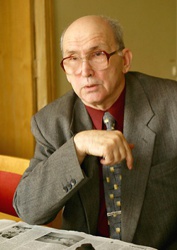
 The institute was founded in 1980. For 28 years, it was directed by its organizer, Professor Vladimir Vladimirovich Ignatov, Dr. Sci. (Biol.), Honored Science Worker of the Russian Federation.
The institute's research efforts are directed mainly to elucidating the molecular basis of plant-microorganism interactions. This knowledge is essential to the development of effective, up-to-date genetic-engineering, ecological, agricultural, and other biotechnologies.
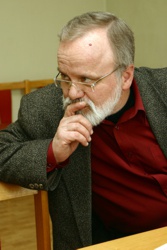
At the general meeting of the Division of Biological Sciences, Professor Sergei Yuryevich Shchyogolev, Dr. Sci. (Chem.), was elected director of the IBPPM RAS for a period of 5 years. His election was confirmed by RAS Presidium Resolution No. 9, dated January 15, 2008.
In April 2010, the IBPPM RAS marked its 30th anniversary. It is the first academic institute set up by the USSR Academy of Sciences in Saratov (in 1979) as the academy's leading scientific organization concerned with problems of molecular and physical-chemical biology in the Lower Volga area.
 By Resolution No. 1208, passed by the Presidium of the USSR Academy of Sciences on November 15, 1979, the institute was assigned the task of studying the basic aspects of plant-microorganism relationships as a phenomenon constituting a fundamental basis for the evolution of living matter on Earth. In addition, it was contemplated that the institute would also be involved in tackling several applied research problems on the basis of understanding the phenomenon of associative symbiosis, leading to its use in the development of biotechnologies for environmentally responsible agriculture, soil bioremediation from xenobiotics, and so on.
Professor V.V. Ignatov, Dr. Sci. (Biol.), head of the kafedra (subfaculty) of Biochemistry and Biophysics of Saratov State University, was appointed organizing director of the institute. The order that work at the institute be started was issued by him on April 23, 1980, and it is this date that can be considered the birth date of the IBPPM RAS.
During the 30 years of its existence, the IBPPM RAS has secured a well-deserved place among the country's leading scientific centers. Publications by its staff have become widely known among specialists working at Russia's scientific and educational establishments, in the former Soviet republics, and in other foreign countries.
Currently, the institute has 115 staff, 60 of whom are scientists. Of them, 17 hold a doctor of science degree (doktor nauk) and 34 hold a candidate of science degree (kandidat nauk). The average age of IBPPM RAS scientists with a doctor's degree is 51, and that of scientists with a candidate's degree is 42-noticeably lower than the corresponding values for the RAS as a whole. Seven staff members hold the academic rank of professor.
The IBPPM RAS is made up of the following laboratories:
- Biochemistry [Head: Professor V.V. Ignatov, Dr. Sci. (Biol.)]
- Microbiology [Head: Professor V.E. Nikitina, Dr. Sci. (Biol.)]
- Microbial Genetics [Head: Professor E.I. Katsy, Dr. Sci. (Biol.)]
- Plant Cell Physiology [Head: O.I. Sokolov, Dr. Sci. (Biol.)]
- Bioengineering [Head: M.I. Chumakov, Dr. Sci. (Biol.)]
- Environmental Biotechnology [Head: Professor O.V. Turkovskaya, Dr. Sci. (Biol.)]
- Immunochemistry [Head: Professor S.Yu. Shchyogolev, Dr. Sci. (Chem.)]
- Nanobiotechnology [Head: Professor N.G. Khlebtsov, Dr. Sci. (Phys.-Math.)]
- Microbial Physiology [Head: Professor O.V. Ignatov, Dr. Sci. (Biol.)]
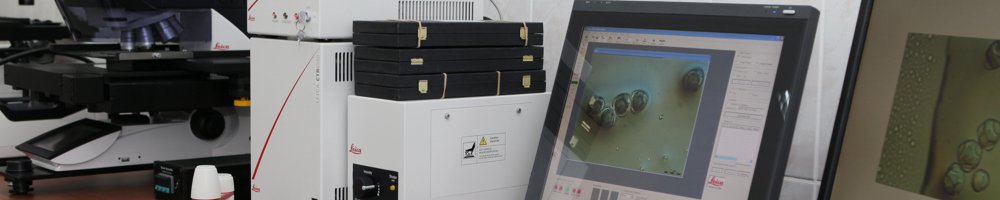
In accordance with Resolution No. 185, passed by the Bureau of the RAS Division of Biological Sciences on October 27, 2009, a Center for the Collective Use of Research Equipment (CCU), called «Simbioz» (Symbiosis), was established at the IBPPM RAS. The center's up-to-date, high-precision, and efficient equipment allows the conduct of research by using light, fluorescence, laser confocal, electron, and atomic force microscopies; UV-vis, infrared, and atomic absorption spectroscopies; static and dynamic light scattering; gas and liquid chromatographies; DNA amplification by polymerase chain reaction; enzyme immunoassay; and other methods. The work of the Simbioz CCU should aid in increasing the level of basic and applied research at the IBPPM RAS as well as at the institutes of the RAS Saratov Science Center and at the science and education organizations in Saratov and the Volga River area that cooperate with them.
Main research themes funded by the state budget (PI: Principal Investigator):
- «Biopolymers and low-molecular-weight compounds in the interaction between plants and microorganisms» [PI: Professor V.V. Ignatov, Dr. Sci. (Biol.)]
- «Integrated immunochemical analysis of ectosymbiotic plant-microbe systems» [PI: Professor S.Yu. Shchyogolev, Dr. Sci. (Chem.)]
- «Role of plant-microbial communities and fungi in the environmental transformation and degradation of pollutants» [PIs: Professor O.V. Turkovskaya, Dr. Sci. (Biol.)]
- «Genetic regulation of social motility and of the formation of major cell-surface components in plant-associated bacteria» [PI: Professor E.I. Katsy, Dr. Sci. (Biol.)]
- «Transfer of DNA-protein complexes to eukaryotic cells» [PI: M.I. Chumakov, Dr. Sci. (Biol.)]
- «Integrating role of the actin cytoskeleton and its associated proteins in the adaptation and communication responses of plant cells» [PI: O.I. Sokolov, Dr. Sci. (Biol.)]
- «Role of glycoproteins and biogenic low-molecular-weight compounds in the life activities of bacteria and fungi» [PI: Professor V.E. Nikitina, Dr. Sci. (Biol.)]
- «Electrophysical characteristics of bacteriophage-infected microbial cells» [PI: Professor O.V. Ignatov, Dr. Sci. (Biol.)]
- «Nanobiotechnology of particles with a tunable plasmon resonance: synthesis, functionalization, optical properties, and application to biology and medicine» [PI: Professor N.G. Khlebtsov, Dr. Sci. (Phys.-Math.)]
Much of this research has been supported by grants from various science foundations (RF President's Fund for Leading Scientific Schools, the Ministry of Education and Science of the RF, the RFBR, the INTAS, the INCAS, NATO, etc.).
The IBPPM has a dissertation council (D 002.146.01) for the defense of dissertations submitted for the award of the doctor of science and candidate of science research degrees. The council has been in existence since 2003.
International ties. The IBPPM RAS has been interacting with the following research institutions:
In the USA
- Joint Institute for Computational Sciences, University of Tennessee (Knoxville) and the Oak Ridge National Laboratory
- Institut de Genetique et Microbiologie (Orsay)
- Institut National de la Sante et de la Recherche Medicale (Paris)
- Department of Experimental Biophysics, Humboldt University (Berlin)
- Institute of General Ecology and Environmental Protection, Dresden University of Technology (Tharandt)
- Institute of Applied Ecology, Chinese Academy of Sciences (Shenyang)
- Division of Chemistry, School of Sciences and Mathematics, Sheffield Hallam University (Sheffield)
- Interuniversity Microelectronics Center (Leuven)
- Department of Chemistry, University of Florence (Florence)
- Laboratory of Chemistry, Department of Science, Agricultural University of Athens (Athens)
- Department of Nuclear Chemistry, Eotvos Lorand University, Hungarian Academy of Sciences (Budapest)
- Research Institute for Soil Science and Agricultural Chemistry, Hungarian Academy of Sciences (Budapest)
- Laboratory of Enzymatic Catalysis, Institute of Catalysis and Surface Chemistry (Cracow)
- Department of Biochemistry, Marie Curie-Sklodowska University (Lublin)
IBPPM RAS maintains the Collection of Microorganisms
The collection of nonpathogenic microorganisms held at the IBPPM RAS was established in 1981, soon after the institute had been opened. The core of the collection was formed by rhizosphere bacteria of the genus Azospirillum, which had begun to be actively studied after the first member of this genus had been found in the late 1970s. The Azospirillum strains that formed the stock of the collection had been isolated by the institute’s research staff members on expeditions to the Saratov region or had been acquired by exchange from Russian and foreign collections. For more than 30 years, the collection strains of Azospirillum have served as a major model object for basic studies of the molecular mechanisms responsible for the plant-microbe interaction. The assembled collection is Russia’s largest repository of diverse Azospirillum bacteria and is among the registered microbial culture collections in the Russian Federation.
Currently, the collection has more than 300 culture holdings and is being actively supplemented with representatives of various bacterial species. However, the emphasis is, as before, on rhizosphere and plant-associated microorganisms. A large group of the collection’s strains is constituted by microorganisms that show promise for bioremediation research; enhanced tolerance for heavy metals and metalloids; and ability to degrade organic pollutants such as petroleum hydrocarbons, pesticides, and surface-active substances.
The principal directions in the work of the collection are as follows:
- maintenance and supplementation of the collection’s holdings;
- identification of the isolated strains;
- optimization of the storage methods;
- provision of pure cultures for research and teaching purposes and consultations on their culturing and maintenance.
The microorganisms are identified on the basis of studies of their culture–morphological, physiological–biochemical, and genetic characteristics; chemotaxonomic analysis of the cell wall; and immunochemical analysis.
The current catalog includes 213 strains of rhizosphere and plant-associated bacteria held at the IBPPM RAS collection. The scientific names of the bacteria that are listed in the catalog are in accordance with the nomenclature accepted for these microorganisms. If the correct species name is not known, the abbreviation «sp.» is used instead.
The catalog is available in electronic form at the IBPPM RAS website Collection of Rhizospheric Microorganisms.pdf
 An important aspect of the IBPPM RAS's activities is the participation of the institute in the integration of science with higher education.
A Research and Teaching Center for Physical-Chemical Biology, jointly run by the IBPPM RAS and Saratov State University, has been functioning since 1998.Many alumni of Saratov State University who have been given specialized training at the IBPPM RAS in the base kafedras (subfaculties) of Biochemistry (the Faculty of Biology) and of Biophysics (the Faculty of Nonlinear Processes), as well as in the kafedra of Organic and Bioorganic Chemistry (the Faculty of Chemistry), continue their education in biochemistry, biophysics, bioorganic chemistry, microbiology, and biotechnology by joining postgraduate programs affiliated with the IBPPM RAS since 1995.
An important aspect of the IBPPM RAS's activities is the participation of the institute in the integration of science with higher education.
A Research and Teaching Center for Physical-Chemical Biology, jointly run by the IBPPM RAS and Saratov State University, has been functioning since 1998.Many alumni of Saratov State University who have been given specialized training at the IBPPM RAS in the base kafedras (subfaculties) of Biochemistry (the Faculty of Biology) and of Biophysics (the Faculty of Nonlinear Processes), as well as in the kafedra of Organic and Bioorganic Chemistry (the Faculty of Chemistry), continue their education in biochemistry, biophysics, bioorganic chemistry, microbiology, and biotechnology by joining postgraduate programs affiliated with the IBPPM RAS since 1995.In 2010, the IBPPM RAS started to offer doktorantura programs (training for Russia's top research degree, the doctor of science) in biochemistry and microbiology.
A Young Scientists Council has been organized and is active at the IBPPM RAS. The council's main tasks are to encourage the creative activity of the young, to orient young researchers to the advancement of Russian science, and to promote the integration of science with higher education.
Council Chairman: A.A. Shirokov, Cand. Sci. (Biol.), Research Associate.